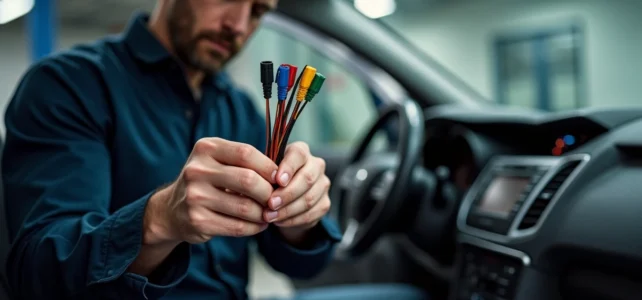
On recent Peugeots (308 II, 3008 II, 208 II, 2008), the ignition signal after contact no longer goes through a simple red wire connected to the ignition switch. It is the BSI unit that controls the power supply via the CAN network, which radically changes the approach to connecting an Android car radio. Identifying the wire colors remains a necessary step, but it is no longer sufficient to ensure a functional installation without understanding the multiplexed architecture of the vehicle.
CAN Network and Peugeot BSI: What Changes for an Android Car Radio
Classic wiring guides describe a red wire for +12V after contact and a yellow wire for permanent +12V. This scheme remains valid for Peugeots from before around 2010, where the ignition switch physically cut off the power supply.
On multiplexed models compliant with ISO 10487 but controlled by the BSI (intelligent service box), the + after contact is a digital signal transmitted by the CAN bus. The BSI decides when the car radio receives power, when it goes into standby, and when it turns off completely.
An Android car radio delivered with a dedicated CANBUS box communicates with the BSI to replicate this behavior. Without this box, the car radio may stay on permanently (and drain the battery) or may never start automatically when the vehicle is turned on. Before touching any wires, checking for the presence and compatibility of the CANBUS module provided with the Android unit is the first real step in the project.
A Peugeot car radio wiring diagram with color code of the wires allows for visualizing this architecture and precisely identifying each connector before starting the installation.
Internal Peugeot Color Codes vs. ISO Car Radio Standard
The most common confusion during wiring comes from a mismatch between two color reference systems that do not speak the same language.
The Peugeot Workshop Reference
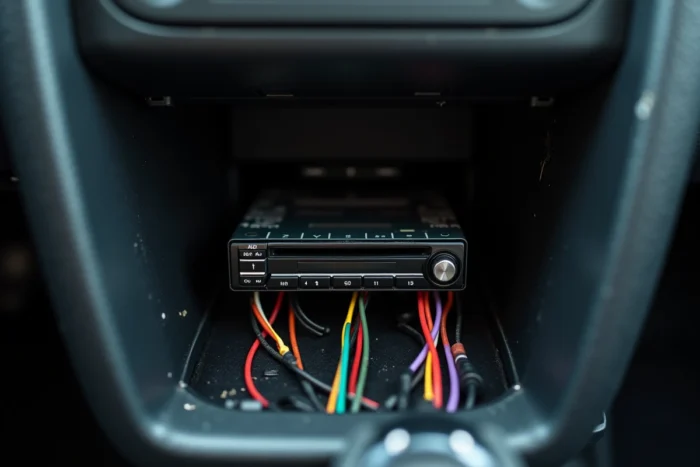
Workshop diagrams and original Peugeot harnesses use two-letter abbreviations: BE (blue), RG (red), NR (black), OR (orange), VJ (green/yellow), GR (gray), JN (yellow), MR (brown), VE (green), VI (purple). These codes appear on the vehicle connectors and in the technical documentation.
The ISO Reference for Commercial Car Radios
Android car radios delivered with an ISO harness follow a standardized color code:
- Yellow: +12V permanent (memory for settings, clock)
- Red: +12V after contact (turning on the unit)
- Black: general ground
- Blue or blue/white: motorized antenna output or amplifier control
- Gray, white, green, purple: speaker pairs (one solid wire for +, one striped wire for -)
The Peugeot abbreviations do not directly correspond to the ISO colors. A “RG” wire on the vehicle side (red in the Peugeot reference) does not necessarily have the same function as a red wire on the car radio side. Crossing the two references without precise documentation amounts to random wiring.
CANBUS Connector and Peugeot Steering Wheel Controls
On Android installations for Peugeot 208, 2008, 5008, or Expert, a wire or small connector dedicated to the CANBUS (often bi-colored, orange/black or labeled “CAN”) accompanies the car radio harness. This connector plays a much broader role than just power supply.
Without the CANBUS connector, the steering wheel controls do not work. The multifunction steering wheel (volume, track change, call answering) communicates with the original car radio via the CAN network. An Android car radio connected only to the power and speaker wires will start, play sound, but lose all interaction with the steering wheel.
The proper shutdown of the unit also depends on this connector. Without CAN communication, the Android car radio does not receive the sleep command sent by the BSI when the ignition is turned off. The result: a screen that stays on for several minutes, abnormal residual consumption, and sometimes an unexpected restart.
Peugeot ISO Adapter: Connect Without Cutting Wires
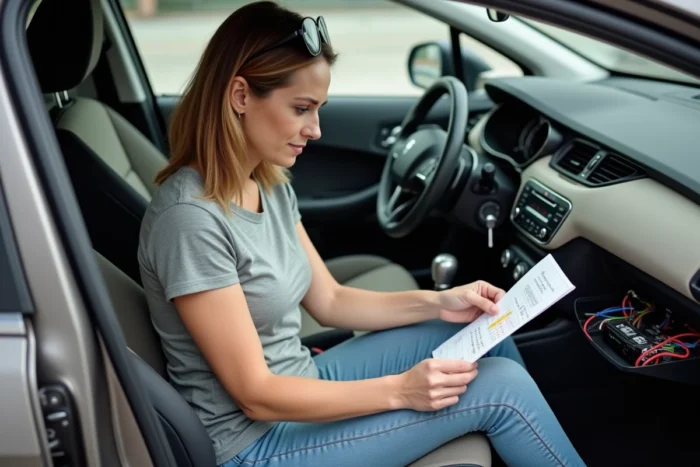
On most recent multiplexed Peugeots, the connection goes through a model-specific ISO adapter. This cable links the vehicle’s original socket to the ISO connector of the Android car radio.
The color code of the wires remains useful in two specific situations:
- Adding an unplanned accessory (external amplifier, rear camera, microphone for hands-free calls)
- Checking a connection that does not work properly after installing the adapter
- Replacing a damaged harness or adapting to a model not covered by commercial adapters
Outside of these cases, cutting and stripping the original wires should be avoided. Each manual connection adds a point of resistance and a risk of oxidation. On a multiplexed network, a poor ground or a bad contact on the CAN line can cause cascading malfunctions (dashboard lights, loss of functions).
Android Car Radio Wiring Errors That Blow Fuses
Two errors frequently appear on forums dedicated to Peugeots.
The first: reversing the +12V permanent (yellow ISO) and the +12V after contact (red ISO). On a non-multiplexed vehicle, this reversal simply prevents the memorization of stations. On a model with BSI, it can create a conflict between the CAN signal and the physical power supply, causing the car radio fuse to blow.
The second: connecting a speaker wire to the vehicle ground. The speaker outputs of an Android car radio are generally of the “bridge” type. Connecting the negative wire of a speaker (the striped wire) directly to the chassis shorts the power stage. The fuse blows immediately, and in some cases, the amplifier built into the unit is destroyed.
Before turning on the ignition for the first time after installation, checking each pair of speakers with a multimeter in continuity mode helps eliminate this risk. A resistance measured between the solid wire and the striped wire of each pair should correspond to the speaker’s impedance (a few ohms), never to zero.