
When an employee on sick leave receives a visit from a medical inspector appointed by their employer, the question of responsibility is not limited to a face-to-face encounter between two parties. At least three actors are involved: the employer who initiates the procedure, the medical inspector who provides an opinion, and the medical service of the Health Insurance that makes the final decision.
Decree No. 2024-692 of July 5, 2024, has established a long-awaited regulatory framework, but the anti-fraud law adopted on June 27, 2026, reshuffles the cards once again.
Independence of the medical inspector: a guarantee that conditions the entire procedure
The first point to examine is not the conduct of the counter-visit, but the status of the person conducting it. The medical inspector appointed by the employer must be independent and have no private ties with the employer. This requirement, reiterated by Article L. 1226-1 of the Labor Code, is not merely a formality: it conditions the very validity of the inspection.
An employer who chooses a practitioner linked to the company by a regular service contract or by a family tie would risk having the entire procedure annulled. Here, the responsibility is twofold. The employer is accountable for the choice of the doctor. The doctor, in turn, engages their ethical responsibility if they accept a mission where their impartiality is compromised.
In practice, when questioning medical control by a medical inspector, the first line of responsibility lies in this initial selection. An inspection conducted by a biased practitioner protects neither the employer nor the employee.

July 2024 Decree: who decides the place, time, and follow-up
Before Decree No. 2024-692, the rules for the counter-visit were primarily based on jurisprudence. The text now clarifies several points that delineate responsibilities more clearly.
The medical inspector chooses the modalities
It is the doctor, not the employer, who decides the place and time of the counter-visit. The visit can take place at the employee’s home or at the doctor’s office. It can occur at any time during the hours of prohibition for leaving (9 AM-11 AM and 2 PM-4 PM), or during the hours communicated by the employee in the case of authorized free time.
This provision has a direct consequence on responsibility: the employer cannot impose on the doctor to intervene at a specific time or to go to a location of their own choosing. If the employer gives instructions to the doctor regarding the conduct of the visit, they step outside their role as principal and engage their own responsibility.
Employee’s obligation to communicate
The employee is obliged to inform their employer of their place of rest if it differs from their home. The failure to transmit this information may justify the suspension of complementary benefits. The employee’s responsibility is engaged on a specific point: their availability during the scheduled time slots.
If the employee is absent during the counter-visit without a legitimate reason, the medical inspector notes this and sends their report to the employer. The employer can then suspend the payment of the salary supplement. However, they cannot impose a disciplinary sanction solely based on this absence.
Anti-fraud Law 2026: the responsibility of the fund is now traceable
The anti-fraud law adopted on June 27, 2026, introduces a change that modifies the distribution of responsibilities between the employer’s medical inspector and the medical control service of the CPAM.
Until now, when the medical inspector appointed by the employer concluded that the sick leave was not (or no longer) justified, the health insurance fund could ignore this opinion without having to explain itself. The fund must now provide a written justification for its decision if it does not follow the opinion of the medical inspector, and inform the employer.
This obligation to provide justification creates a form of procedural co-responsibility. The employer’s medical inspector produces an opinion that, on its own, does not alter the daily allowances paid by Social Security. The fund remains the decision-maker regarding legal benefits. However, it becomes accountable for its choice, as it must justify it.
For the employer, this traceability changes the game. If the fund dismisses the opinion of the medical inspector without sufficient justification, the employer has a means of contestation that they did not have before.
Local regime of Alsace-Moselle: an extension to monitor
The anti-fraud law 2026 also extends the possibility of employer counter-visits to the local regime of Alsace-Moselle, which until now operated under its own rules. This extension comes with a specific framework maintained for this regime, meaning that the responsibilities of each actor may vary depending on the territory.
The available data does not yet allow for measuring the concrete impact of this extension, with initial feedback expected in the coming months. This point deserves to be monitored, as it could create differences in treatment between employees based on their workplace.
Concrete distribution of responsibilities: who is responsible for what
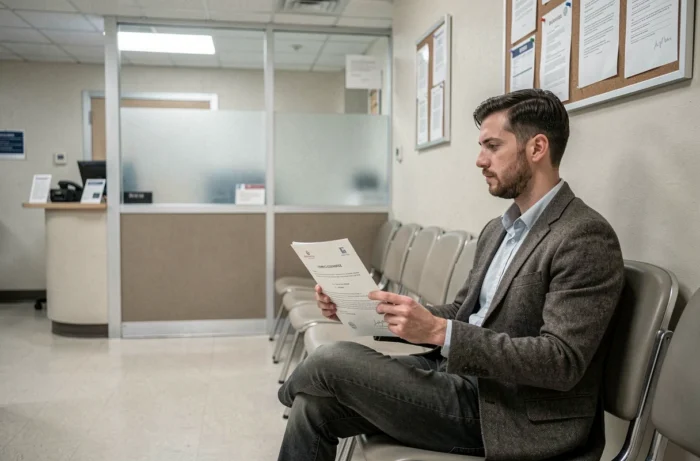
To clarify the chain of responsibility, here is what each actor assumes:
- The employer is responsible for choosing an independent medical inspector, for complying with the legal framework to initiate the counter-visit (they must pay a salary supplement to have this right), and for how they use the medical report received.
- The medical inspector engages their ethical and professional responsibility for the quality of their examination, the impartiality of their conclusions, and the respect for medical confidentiality. They only transmit to the employer their conclusions on whether the sick leave is justified or not, never the diagnosis.
- The medical service of the CPAM is responsible for the final decision regarding daily allowances. Since the anti-fraud law 2026, this responsibility is reinforced by the obligation to justify any disagreement with the opinion of the employer’s medical inspector.
- The employee is required to communicate their place of rest and to remain available during the hours of prohibition for leaving. Their unjustified absence may lead to the suspension of complementary benefits paid by the employer.
The employer’s medical control remains a system where no actor bears the entire responsibility alone. The framework established by the 2024 decree and the 2026 law makes this distribution clearer, but also more constraining for the fund, which can no longer remain silent in the face of an unfavorable employer’s opinion regarding the continuation of the sick leave.