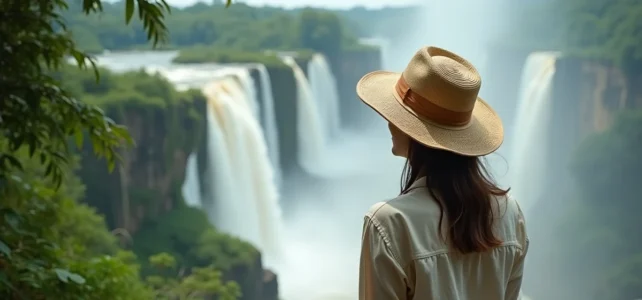
Argentina spans over 30 degrees of latitude, from the Tropic of Capricorn to Tierra del Fuego. This geographical range produces significant climatic differences between the subtropical north and southern Patagonia. Choosing when to organize your trip to Argentina thus involves balancing regions, activities, and recent administrative constraints, notably mandatory health insurance.
Temperatures and Precipitation by Region and Season in Argentina
The table below summarizes the major climatic trends for the four areas that most itineraries traverse. The seasons are reversed compared to France: the Argentine summer runs from December to February, and winter from June to August.
| Region | Spring (Oct-Nov) | Summer (Dec-Feb) | Autumn (Mar-May) | Winter (Jun-Aug) |
|---|---|---|---|---|
| Buenos Aires | Mild, moderate rain | Hot and humid | Mild, beautiful light | Cool, little rain |
| Northwest and Iguazu | Increasing heat | Very hot, heavy rain | Decreasing heat | Dry, pleasant temperatures |
| Patagonia and Ushuaia | Cold, moderate wind | Accessible season, strong wind | Cold, first snows | Closed roads, intense cold |
| Cuyo and Mendoza | Dry, pleasant | Hot, grape harvest in March | Mild, colorful vineyards | Cold and dry, skiing at altitude |
The key takeaway from this table: the north and south are not visited at the same time. The Iguazu Falls during the torrential rains of January offer a powerful but uncomfortable spectacle. Patagonia in July is simply inaccessible for the majority of trekking.
To identify the best time to travel to Argentina based on your itinerary, you need to cross-reference the priority destination with the corresponding climate window.
Climatic Differences Between Patagonia and Northern Argentina: Two Distinct Trips
An itinerary combining Buenos Aires, the northwest (Salta, Jujuy), and Patagonia requires accepting a compromise. No month guarantees optimal conditions everywhere simultaneously.
Southern Spring, the Most Versatile Window
October and November concentrate the best average conditions. Buenos Aires shows mild temperatures. The northwest remains dry before the rainy season. Patagonia begins to thaw, and trails gradually reopen.
However, the glaciers of Patagonia remain partially snow-covered in October, which limits access to Perito Moreno or Fitz Roy. November offers a better compromise for southern hiking.
Southern Summer, the Expensive High Season
December to February corresponds to the tourist high season in Patagonia and Ushuaia. Prices rise, and shelters fill up. The wind blows strongly in Patagonia, making some hikes strenuous.
Conversely, the north experiences its heaviest rains during this period. The dirt roads around the Quebrada de Humahuaca can become impassable. Combining north and south in the middle of Argentine summer is the least favorable scenario.
Autumn, an Underestimated Slot
March and April present an interesting profile. The north returns to a dry climate. Buenos Aires benefits from low-angle light and pleasant temperatures. Patagonia remains accessible until mid-April, with autumn colors on the lenga forests.
The downside: days shorten quickly south of the 45th parallel, and accommodations in Patagonia begin to close at the end of April.
Mandatory Health Insurance from 2025: What Decree 366/2025 Changes for Travelers
A recent parameter modifies the preparation for a trip to Argentina, regardless of the chosen season. Since July 1, 2025, Decree 366/2025 requires all foreign non-resident travelers to present health insurance with a minimum coverage of 20,000 USD, covering basic care, hospitalization, and 24/7 emergencies.
This obligation is checked upon arrival in the country. Agents from the Dirección Nacional de Migraciones also verify the consistency of the declared stay. The same decree allows for denial of entry if the agent believes the traveler is not a genuine tourist, particularly targeting those who chain 90-day stays.
- Obtaining travel insurance before departure, with verified coverage of at least 20,000 USD, is now a condition of entry and no longer just a recommendation.
- Having a ticket out of the country within 90 days is checked upon arrival by immigration services.
- Bank cards offering integrated travel insurance must be verified: the coverage limits and specific guarantees (hospitalization, repatriation) do not always meet the decree’s requirements.

Choosing Your Travel Season in Argentina Based on Priority Activity
The choice of period depends less on a “best month” universally than on the activity that motivates the trip. Here are the main scenarios.
- Trekking in Patagonia (Fitz Roy, Torres del Paine on the Chilean side): November to March, with a peak in January.
- Whale watching in Puerto Madryn: June to December, peak between September and November.
- Iguazu Falls without excessive rain: May to September, when the flow remains spectacular but showers are rare.
- Skiing in Bariloche or Las Leñas: July and August.
- Mendoza vineyards during the grape harvest: late February to early April.
A trip covering Buenos Aires and Patagonia without passing through the north benefits from being scheduled in November or March. A northwest circuit (Salta, Jujuy, Iguazu) without Patagonia works very well between May and September, in the middle of Argentine winter, when northern temperatures remain mild and prices lower.
The key data that summarizes the decision-making: the ideal season in Argentina does not exist; only the itinerary determines it. Setting your dates after establishing your stops, and not the other way around, remains the most reliable method to avoid climatic disappointments and high-season surcharges.