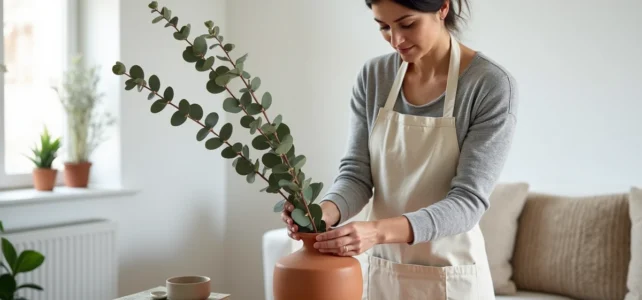
Your living room serves as an office in the morning, a classroom in the afternoon, and a cinema in the evening. Arranging and decorating a home today is no longer just about choosing a nice sofa and repainting a wall. It’s about adapting each room to uses that change several times a day. The following ideas stem from this reality to propose concrete, applicable solutions without major renovations.
Decoration Adapted to the Hybrid Uses of the Home
An office set up in a corner of the living room often spills over onto the dining table. The problem is not a lack of space, but the absence of visual separation between functions.
A movable partition, a thick curtain on a rail, or even an open bookshelf placed perpendicular to the wall is enough to create two distinct zones without actually closing them off. Modular furniture replaces fixed pieces: an extendable table folds away after remote work, a storage ottoman clears the floor when hosting friends.
To take this logic further, browsing the home page of C Nouveau allows you to identify layout solutions designed for these lifestyles that alternate work, rest, and conviviality in the same space.
Multifunctionality is not just about furniture. Adjustable lighting (dimmers or movable lamps) transforms the atmosphere of a room in seconds. Cool, direct light for working, warm, soft light for relaxing. Lighting is the most underestimated decorative lever for an adaptable interior.
Ceilings and Floors as Decorative Surfaces in Their Own Right
Most decorating advice focuses on walls, furniture, and accessories. Ceilings and floors often remain white and neutral, as if they don’t exist.
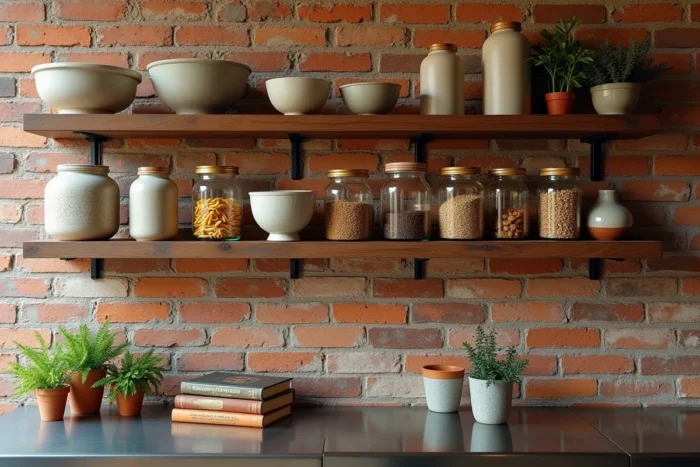
Painting a ceiling in a bold shade (sage green, deep blue, terracotta) dramatically alters the perception of a space. In a high room, it brings a sense of intimacy. In a narrow hallway, a colored ceiling draws the eye upward and makes the narrowness forgettable.
Graphic Flooring to Structure an Open Interior
In an open living-kitchen area, changing the flooring delineates zones without any partitions. Cement tiles in the kitchen area, hardwood in the living corner: the transition creates a natural visual boundary.
A contrasting floor replaces a partition in an open space. This solution is particularly useful in small areas where every square meter counts. Graphic floors (geometric patterns, checkerboards, patterned tiles) add character without cluttering the walls.
Natural Materials and Biophilic Design for Easy Decoration
The decorating trend that is clearly emerging moves away from the cold minimalism of previous years. Interiors gain warmth with raw materials: unvarnished wood, linen, rattan, stone, handcrafted ceramics.
Biophilic design goes beyond placing three plants on a shelf. It integrates nature into the very structure of the layout:
- Materials with visible textures (wood grain, stone veining) on countertops, shelves, or mirror frames, rather than smooth, uniform surfaces
- Natural light maximized by light curtains instead of opaque drapes, and mirrors placed facing windows to diffuse brightness
- Dense foliage plants in dead corners or lost nooks, transforming an unused space into a focal point of greenery
Natural textures warm up an interior faster than any color. A woven basket, a raw wool blanket on an armchair, a light fixture made of plant fibers change the atmosphere of a room in an hour, without paint or renovations.
Dark Shades and Personal Objects for a Characterful Interior
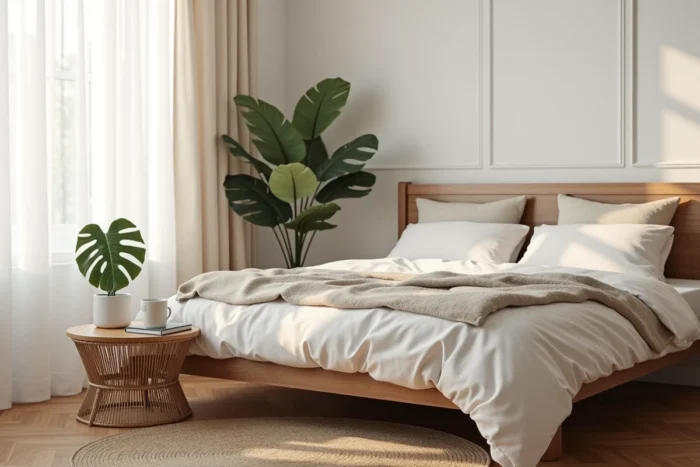
A well-placed dark wall creates depth, not confinement, even in a modest room.
A single wall in a dark shade (forest green, midnight blue, chocolate brown) behind a sofa or headboard provides a visual anchor for the room. The rest of the walls can remain light. A single dark wall is enough to transform the ambiance of an entire room.
Objects with a Story Rather Than Catalog Items
Personalization comes less from buying matching decorative sets than from accumulating objects that tell a story. A vintage vase, a framed poster brought back from a trip, a repainted antique piece. These handcrafted or reclaimed items bring what no store sells: uniqueness.
Grouping these objects into small sets (odd groups of three or five) on a console, shelf, or windowsill creates a composed effect without overcrowding. Decorating with what you already own costs nothing and results in something unique.
Concrete Tips for Decorating Without a Big Budget or Renovations
Changing the arrangement of furniture is the most effective and free modification. Moving the sofa away from the wall, rotating the dining table, shifting a lamp from one corner to another: these adjustments change the flow and perception of space.
- Replacing door, drawer, and cabinet handles with brass, leather, or ceramic models transforms a basic piece of furniture into a character piece for just a few euros
- Layering two or three rugs of different sizes in the living room creates a zone of visual and tactile comfort, even on a worn floor
- Hanging curtains as high as possible (just below the ceiling) and letting them touch the floor gives an immediate sense of height, regardless of the actual size of the window
These actions require neither technical skills nor a significant budget. They rest on a simple principle: decoration works through proportions and contrasts, not accumulation. A well-arranged interior with a few chosen elements will always be more pleasant than a room filled with coordinated furniture and accessories but lacking depth.