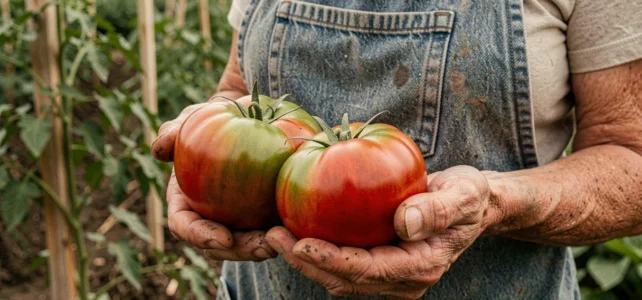
The thickness of a tomato’s skin depends on two distinct factors: the genetic heritage of the cultivated variety and the growing conditions of the plant, particularly the consistency of water supply. Confusing these two causes leads to correcting the wrong lever, with no result on the fruit’s texture. Understanding which of the two mechanisms is at play in your garden allows for precise action.
Genetic thick skin or water stress: how to tell the difference
Not all tomato varieties produce skin of the same thickness. Cultivars selected for their ability to withstand transport or for their “crack-resistant” characteristics naturally have a more robust epidermis. This is the case with Roma, often used for sauces, whose thick skin is part of its varietal identity.
Conversely, hardening caused by water stress is recognized differently. If your tomatoes have tough skin while the variety is known for its delicacy (Rose de Berne, Noire de Crimée, Cœur de Bœuf), the problem likely stems from water management or sun exposure.
A simple test: grow the same variety two years in a row while only changing your watering schedule. If the skin texture changes, the variety is not to blame. If it remains the same despite regular watering, consider changing cultivars. When the diagnosis leans towards a cultural problem rather than a genetic one, there are solutions for thick tomato skin that detail the adjustments to be made.
The water yo-yo: the main cause of hardened tomato skin
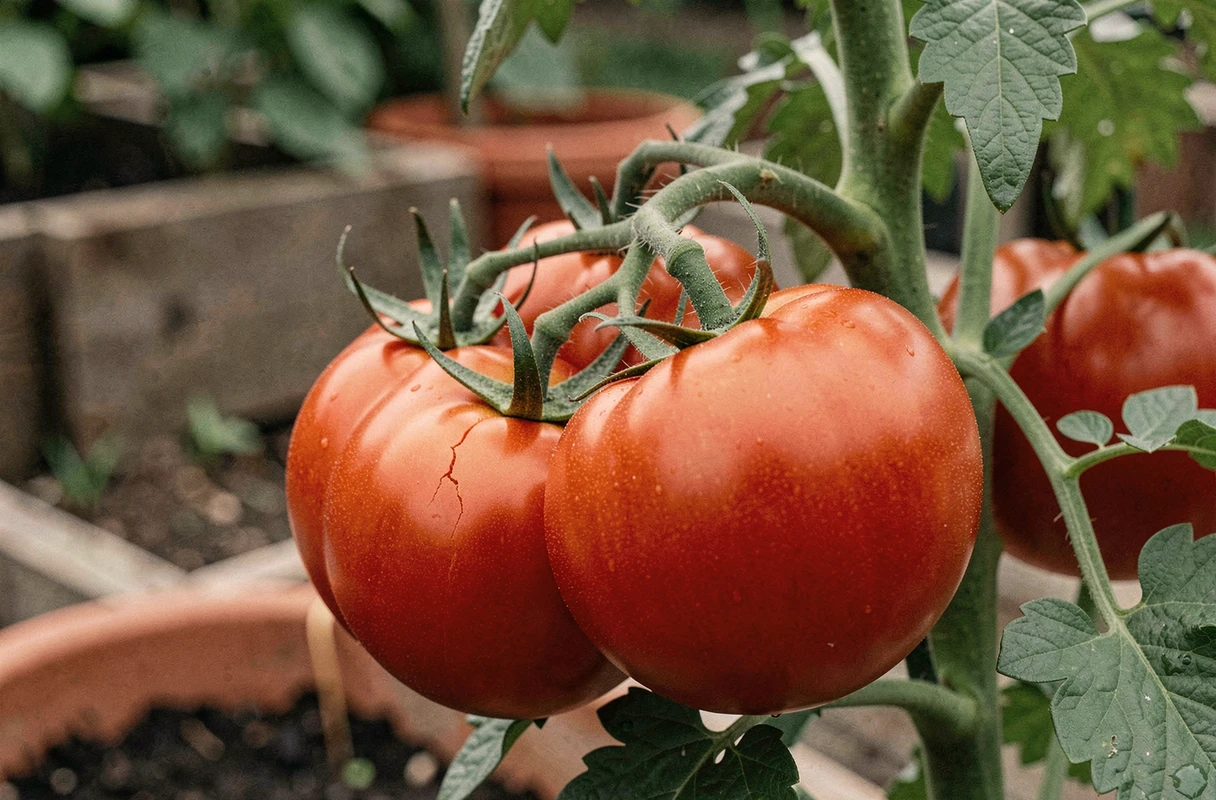
The most documented cultural factor remains the alternation between prolonged drought and heavy watering. This phenomenon, which gardeners call water yo-yo, causes a mechanical imbalance: the fruit’s pulp grows faster than the epidermis can keep up.
The result is twofold. Either the skin thickens to compensate for the internal pressure, or it cracks suddenly after a heavy watering or a storm. Both situations reflect the same underlying problem.
What happens inside the fruit
When the soil remains dry for several days, the tomato slows its growth and its epidermis hardens. A sudden influx of water restarts the growth of the flesh, but the already hardened skin does not stretch anymore. The fruit cracks or retains a tough texture depending on the intensity of the stress experienced.
Regular watering at the base is better than heavy watering spaced out. The consistency of soil moisture is the parameter to monitor, not the total volume of water supplied over the week.
Mulching and base watering: stabilizing soil moisture
The most effective prevention against skin hardening relies on the water stability of the soil around the tomato plants. Two complementary practices can achieve this.
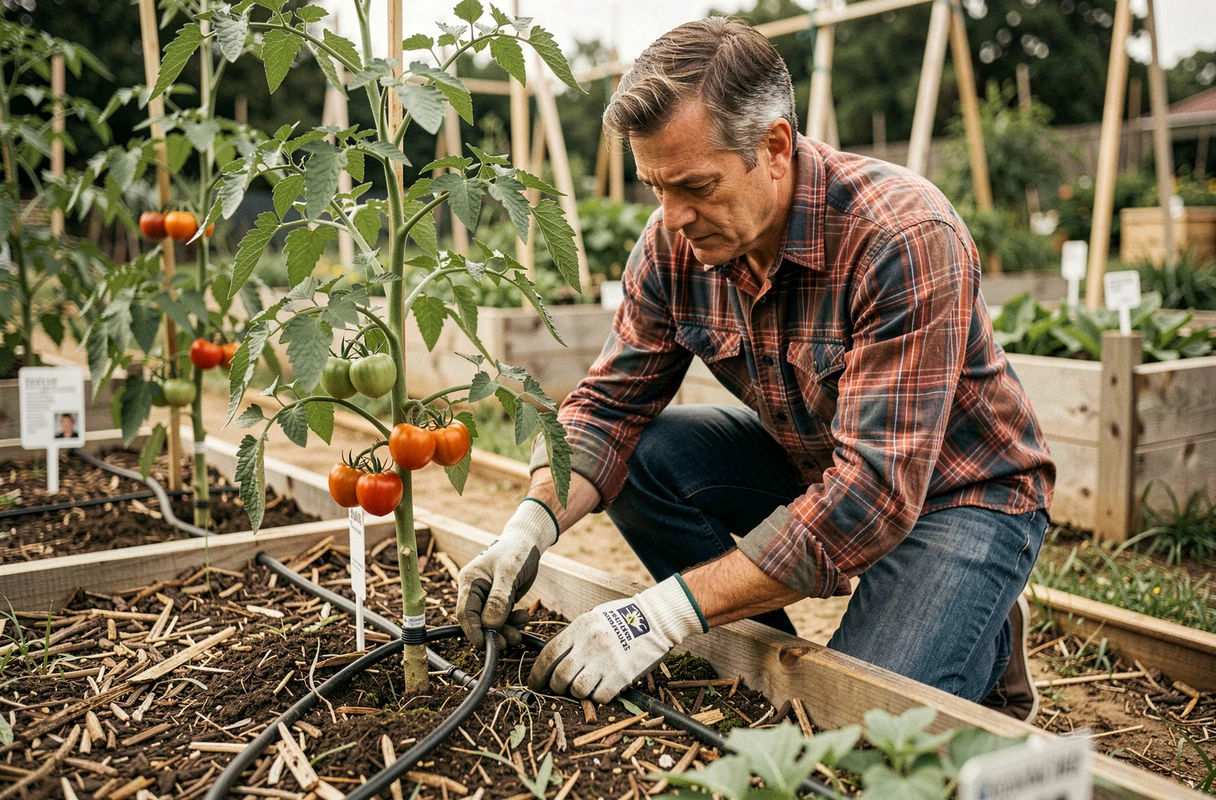
- Mulching at the base of the plants (straw, dried grass clippings, wood chips) reduces evaporation and cushions moisture fluctuations between waterings. It also limits the effect of high temperatures on soil temperature.
- Watering at the base, preferably in the morning, avoids wetting the foliage (which promotes fungal diseases) and concentrates water where the roots can absorb it.
- A programmed drip irrigation system almost entirely eliminates the risk of water yo-yo, as it delivers a constant flow without manual intervention.
These actions do not guarantee a thin skin if the variety is genetically predisposed to a thick epidermis. However, they eliminate the cultural factor, allowing for confirmation or dismissal of the varietal hypothesis.
Direct heat and sun exposure: an underestimated factor
A fruit exposed to intense sunlight without protection can develop areas of tougher skin, sometimes accompanied by whitish or yellowish spots (a phenomenon called sunscald). This localized thermal stress thickens the epidermis at the affected spot.
Tomato plants that have been overly pruned lose their natural protection against direct radiation. Moderate pruning remains useful for air circulation and the prevention of certain diseases, but removing too much foliage exposes the fruits to excessive heat.
Beyond a certain temperature threshold, the plant’s growth slows, and the skin hardens as a protective mechanism. Maintaining sufficient foliage around the clusters provides a free and effective thermal barrier.
Tomato varieties with fine skin: which ones to choose for your garden
If your soil, watering, and exposure are controlled, but the skin remains thick, the problem is varietal. Some tomato varieties are recognized for their fine skin and melting flesh:
- Rose de Berne: very thin skin, juicy flesh, suitable for salads. Sensitive to splitting in case of water yo-yo.
- Noire de Crimée: thin skin, complex flavor, soft texture. Requires well-drained soil.
- Cœur de Bœuf (Cuor di Bue type): soft skin, few seeds, ideal raw. Fruits can be irregular.
- Brandywine: an old American variety, delicate skin, late maturity. Modest production but remarkable taste.
These heirloom varieties have not been selected for commercial transport resistance. Their fine skin makes them more fragile, which explains their absence from supermarket shelves. In return, they offer an incomparable mouthfeel.
Note: varieties labeled “crack-resistant” or “anti-crack” achieve this property through a thicker epidermis. This compromise between robustness and skin fineness is a cultivation choice to be made knowingly.
The skin of a tomato tells the story of its growth. A variety with fine skin grown in stable soil, watered regularly, and protected from direct sunlight produces fruits with a soft texture. Changing varieties is pointless if water yo-yo persists, and correcting watering will not suffice against a genetically thick cultivar. Identifying the right lever before acting avoids a disappointing harvest season.