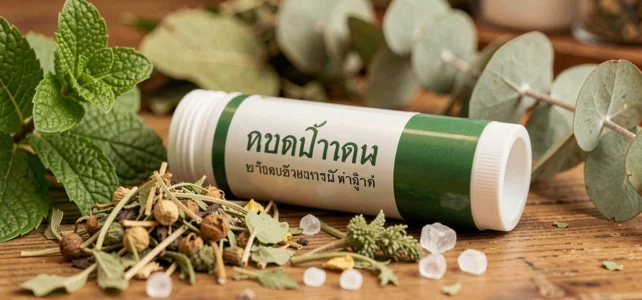
The yadom, this small plastic tube that Thais carry in their pockets at all times, often intrigues travelers. This herbal and essential oil nasal inhaler is part of daily life in Thailand, just like Tiger Balm in other Asian countries. Understanding its composition, uses, and precautions to take before purchasing can help avoid some unpleasant surprises.
Composition and regulatory classification of yadom in Thailand
The yadom comes in the form of a stick a few centimeters long containing a blend of essential oils. It most commonly includes eucalyptus, menthol, camphor, and sometimes borneol. Each brand adjusts its formula, but the base remains close to a well-defined local pharmacopoeia.
What is surprising is the regulatory framework. In Thailand, yadom falls under the Cosmetics Act B.E. 2558, not pharmaceutical regulations. Specifically, they are classified as cosmetics rather than medical devices, which implies different manufacturing requirements than those applied to medications.
This classification has direct consequences for consumers. Microbiological controls were historically less strict than for pharmaceutical products. This partly explains the massive recall that occurred in 2025 for the Hong Thai brand, an event that changed the game for the entire sector.
If you are looking for a reliable guide to Thai inhalers, the question of the regulatory framework deserves to be prominently featured.
Hong Thai recall: what it changes for buyers
In October 2025, the Thai FDA ordered the recall of approximately 200,000 Hong Thai inhalers from batch 000332, manufactured on December 9, 2024. The analysis revealed excessive levels of bacteria, yeasts, molds, as well as the presence of Clostridium in the balm associated with the product.
The matter did not stop there. Joint inspections between the police and the Thai FDA led to the seizure of over 2.35 million products at several production sites in Bangkok and Samut Sakhon province. Some of these sites were not officially authorized to manufacture inhalers.
For travelers bringing back yadom by the handful as souvenirs, this information is crucial. The manufacturer Hong Thai has committed to introducing UV sterilization at every stage of production. This tightening of controls marks a turning point in the industry’s practices.
Check a batch before use
Have you ever noticed the inscriptions on the packaging of a yadom? The batch number and manufacturing date are printed on the tube or blister. After the Hong Thai recall, getting into the habit of checking this information before purchasing becomes a useful reflex.
The recommendation from the Thai FDA was clear: do not use products from the affected batch and return them to the point of sale. If you are buying in Thailand, prefer official retail outlets (pharmacies, convenience store chains) rather than market stalls without traceability.
Concrete criteria for choosing a Thai inhaler
Beyond health safety, the choice of a yadom depends on a few simple criteria that are rarely detailed.
- Format: the classic nasal stick remains the most common and practical to carry. Some brands offer double formats (one side inhaler, one side balm to apply to the skin), which provides appreciated versatility while traveling.
- Composition: check the ingredient list if you are sensitive to camphor or certain essential oils. Formulas vary significantly from one brand to another, and some contain extracts of lesser-known local plants in Europe.
- Origin and authorization: after the 2025 recall, look for the registration number with the Thai FDA on the packaging. A registered product has undergone minimal compliance checks.
- Shelf life: a yadom gradually loses its aromatic intensity. Most retain their effectiveness for a few months after opening, but menthol evaporates if the cap is not properly closed.
Popular brands and notable differences
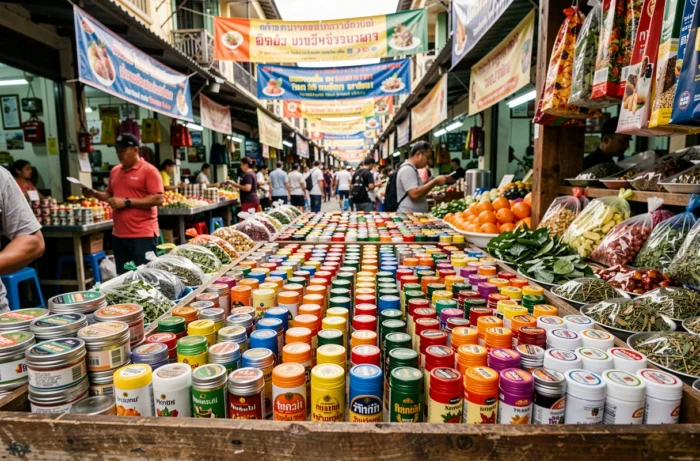
In the Thai market, several brands compete for the favor of locals and tourists. Hong Thai (the ubiquitous yellow tube found in 7-Eleven), Poy-Sian, and Vapex are among the most widespread. Each has a distinct olfactory profile.
Hong Thai relies on a fairly strong camphor formula. Poy-Sian offers an integrated rollerball format, with a gentler sensation. Discussions on travel forums in Thailand show that the choice remains very personal and related to each individual’s sensitivity to menthol.
Common uses and limitations of yadom in daily life
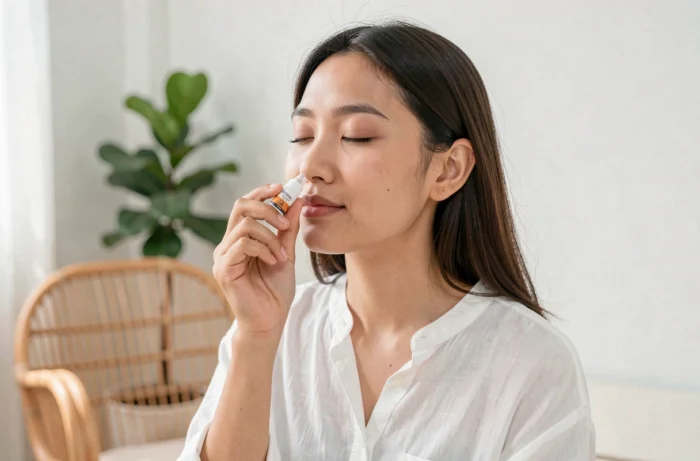
Thais use yadom in various situations: fatigue during transport, a stuffy nose, slight nausea, or simply for a moment of relaxation. A brief inhalation of menthol and eucalyptus provides an almost immediate feeling of freshness.
Why this enthusiasm? The tropical climate, urban pollution in Bangkok or Chiang Mai, and long bus journeys partly explain the massive adoption. For many Thais, yadom serves a role similar to that of an espresso: a quick and accessible sensory boost.
However, yadom does not replace medical treatment. It does not cure a cold or an allergy. The essential oils it contains (camphor, menthol) are generally not recommended for young children and pregnant women in most health guidelines. Its use remains external and occasional.
- Not recommended for children under six years old, due to concentrated camphor and menthol.
- Do not apply the balm near the eyes or on broken skin.
- If in doubt about an allergic reaction, discontinue use and consult a healthcare professional.
The yadom remains a pleasant travel companion and a valued souvenir, provided it is purchased from reliable sources and the batch information is verified. The recent tightening of regulations in Thailand, with the introduction of UV sterilization among manufacturers, is a step towards better safety for consumers, whether they are locals or tourists passing through Bangkok, Phuket, or Chiang Mai.