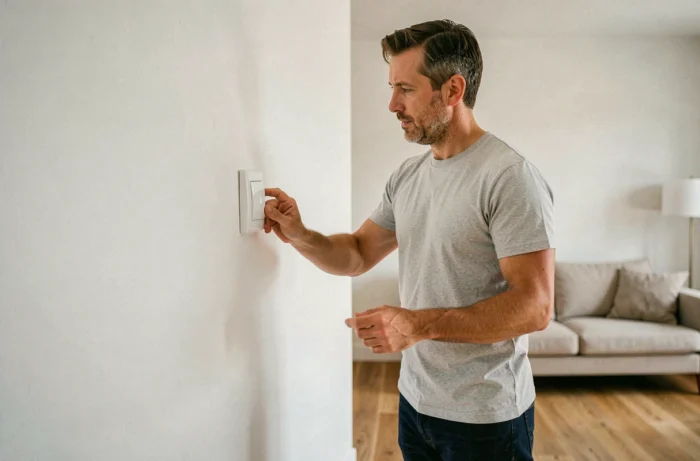
A wireless switch is a device made up of two distinct elements: a transmitter (the wall button) and a receiver called a micromodule, installed near the light fixture or in the existing flush-mounted box. The transmitter sends a radio signal to the receiver, which switches the lighting circuit. No wiring physically connects the two components, allowing the switch to be positioned wherever desired.
Receiver micromodule and neutral wire: the technical part that tutorials gloss over
Installing the wall transmitter is straightforward: double-sided adhesive or two screws are sufficient. The friction point lies on the receiver side.
The micromodule must be connected to the existing lighting circuit. It receives the phase, the neutral, and the lamp return. In older homes, the neutral is not always present in the flush-mounted box of the original switch. It goes directly to the light fixture without passing through the control point.
When the neutral is absent from the flush-mounted box, two options arise: run an additional conductor from the light fixture (which involves cutting into the wall or using a conduit), or install the micromodule directly in the ceiling, behind the light fixture, where phase and neutral coexist. This second solution avoids wiring work but requires working at height on a live circuit turned off at the circuit breaker.
As detailed in the Inside Out article, this step of connecting the micromodule remains the only one that requires real electrical expertise. Identifying the phase, neutral, and lamp return, then connecting them to the correct terminals of the receiver, involves reading a wiring diagram and using a voltage tester.
Wireless switch and NF C 15-100 standard: what engages your responsibility
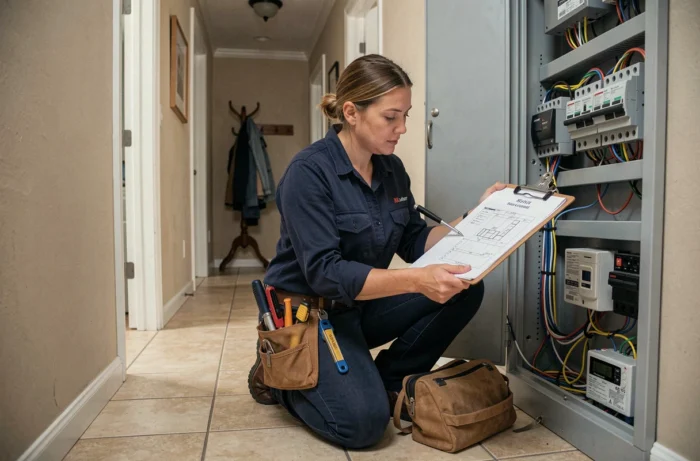
Adding a wireless switch modifies the lighting circuit. This modification, however minor, falls under the NF C 15-100 standard, the reference that governs electrical installations in homes in France.
The NF C 15-100 series has undergone recent updates. The requirements concern circuit protection (circuit breaker suitable for the rating), grounding, and adherence to the wiring diagram. A poorly connected micromodule, an undersized conductor, or a lighting circuit lacking protection at the panel can render the installation non-compliant.
Home insurance and electrical compliance
Insurers may refuse to cover an electrical-related claim if the installation has been modified without adhering to the standard. The electrical diagnosis, mandatory during the sale or rental, reveals these anomalies. A DIY installation without compliance exposes you to a denial of compensation.
The Consuel (compliance control organization) uses the NF C 15-100 as an evaluation grid. Even though a Consuel inspection is not systematic for a simple switch addition, compliance remains the reference in case of disputes.
Concrete cases where an electrician becomes necessary
The intervention of a professional is not always required. However, certain situations strongly recommend, if not necessitate, the involvement of an electrician.
- The home dates from before the 1990s, and the conductors do not have standardized colors (phase in red or brown, neutral in blue, ground in green-yellow). Identifying wires without reliable color coding requires a professional diagnosis.
- The electrical panel does not have a dedicated circuit breaker for the lighting circuit in question, or the existing protection is undersized. Modifying the panel is the work of a qualified electrician.
- The micromodule must be installed in a flush-mounted box that is already crowded (presence of a two-way switch, multiple wires). The available volume is limited, and poor connection tightening creates a risk of overheating.
- The installation requires running an additional neutral conductor between the control point and the light fixture, which involves a physical modification of the embedded wiring.
Installing a wireless switch yourself: conditions for success
If the home has a recent and compliant installation, with an accessible neutral in the flush-mounted box, the installation remains accessible to a methodical DIYer.
Three conditions must be met before starting:
- The power is turned off at the circuit breaker for the relevant circuit (not just at the switch), and the absence of voltage is verified with a VAT tester (voltage absence tester).
- The wires are identifiable by their standardized colors: phase, neutral, and lamp return are clearly distinguished.
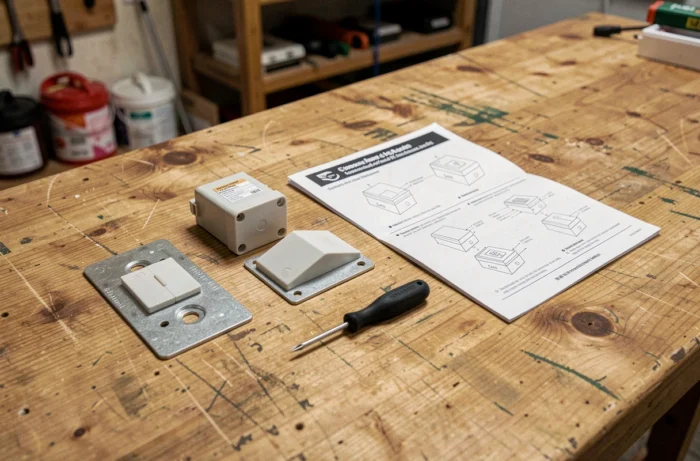
- The instructions for the wireless switch kit correspond to the wiring diagram of the home. Kits from manufacturers like Schneider or Legrand provide precise diagrams, but they assume a compliant installation.
The connection follows a logical order: turn off the power, identify the conductors, connect the receiver micromodule according to the manufacturer’s diagram, fix the transmitter in the chosen location, and then restore power to test the pairing.
The transmitter-receiver pairing
Once the receiver is powered, pairing with the transmitter is usually done by a sequence of presses on a button of the micromodule. This step poses no electrical risk. The pairing is the only truly “wireless” step of the installation.
The decision to call an electrician therefore depends less on the product than on the condition of the existing circuit. A recent home with compliant wiring allows for safe autonomous installation. An older home, with unidentifiable wires or an outdated panel, turns a simple project into a technical intervention that justifies a professional quote.